
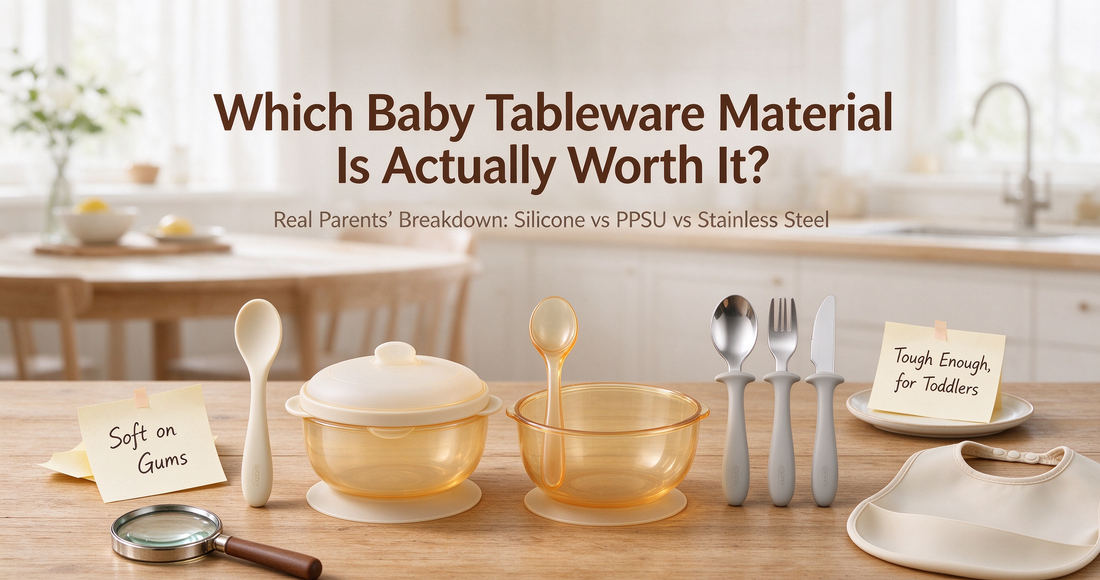
Many parents struggle when picking feeding tableware for their babies. Countless caregivers keep debating: which material — silicone, PPSU or food‑grade stainless steel — is truly worth buying? All three mainstream options can be BPA‑free, yet they differ greatly in softness, clean‑up performance, durability and suitable age ranges. There is no universally perfect material. Real‑world experience shared by overseas parents confirms this: matching tableware to your baby’s developmental stage matters far more than chasing viral trending products.
I have gone through hundreds of real parent posts and compiled numerous first‑hand bad‑purchase stories. Spoiler: no material works flawlessly for everything. Every option comes with annoying downsides marketing copy leaves out. The key is to choose gear based on what your child can physically do at each stage, instead of grabbing whatever goes viral online.
One non‑negotiable ground rule before you shop: throw away any tableware once deep scratches, chips or cracks appear. Those tiny crevices trap food residue that cannot be fully cleaned. Certifications also count. Uncertified knock‑offs defeat the whole purpose of buying “safe” baby tableware.
Food‑Grade Silicone: Great for Early Solids, But Ages Quickly
Silicone is heavily recommended for babies starting solids, and for good reason. It is soft and gentle on sore teething gums, available as suction bowls, soft spoons and bibs. Lightweight and shatterproof, it works for both home and on‑the‑go use. It holds up well to boiling and dishwasher cycles. For 6‑10‑month‑olds still being fed by caregivers, silicone is a solid pick for teething accessories and soft feeding spoons.
That said, silicone has surface micro‑pores. Over time it absorbs food pigments from tomato sauce, beetroot and carrot puree, leading to permanent discoloration. It also traps stubborn food odors, even after repeated washing. Many parents mistake persistent smells for toxic material; more often it simply means the silicone has degraded.
Metal utensils can easily gouge silicone surfaces. Once deep scratches form, replacement becomes necessary, as trapped food builds inside micro‑grooves. Avoid cheap non‑platinum‑cured silicone, which may carry strong chemical odors right out of packaging.
✅ Best for: 6‑10‑month‑old babies for parent‑led feeding and teething support; soft spoons and suction bowls. ❌ Not ideal for long‑term daily use by older toddlers. Expect to replace pieces every few months.
PPSU: The Overlooked Middle‑Ground Option
Scroll through marketplaces and social media, and PPSU rarely gets viral attention. Dig into long‑term parent forum threads, however, and you will find many caregivers switching to PPSU after growing frustrated with stained, smelly silicone.
This translucent honey‑amber polymer handles repeated boiling and dishwasher sanitizing. With no micro‑porous surface, it resists food staining and trapped odors. Its firm texture gives toddlers enough rigidity to scoop thick porridge and mashed food without bending mid‑bite — a huge win for little ones learning self‑feeding. Unlike bare metal, it does not feel icy‑cold inside small mouths.
Real‑world downsides exist though. Do not use UV sterilizers for PPSU. Multiple parent tests confirm regular UV exposure causes accelerated yellowing and hidden brittleness. Heavy biting from teething toddlers may create invisible stress cracks. Counterfeit products are common. Authentic PPSU features that distinct semi‑transparent honey‑amber look. Be cautious of fully opaque bright‑coloured items sold as PPSU at suspiciously low price points.
✅ Best for: 10‑month‑old and above for daily home self‑feeding. Hybrid designs with PPSU bowl/spoon bodies plus silicone non‑slip handles deliver outstanding real‑world performance. ❌ Poor resistance against aggressive teething biting; not suitable for households relying heavily on UV sanitization.
Food‑Grade Stainless Steel (304 / 316): Nearly Indestructible, With Noticeable Drawbacks
Marketing paints stainless‑steel baby tableware as close to perfect: tough, stain‑resistant, odour‑free, and often advertised to pass down across multiple children. 316 stainless steel offers better resistance against acidic tomato and citrus purees compared to standard 304. Critical warning: never use grade 430 stainless steel for direct baby‑food contact.
Many families of younger babies run into avoidable safety pitfalls. Plain single‑wall stainless steel transfers temperature extremely fast. Hot baby food makes bowls and spoons dangerously hot to touch. Cold yoghurt or fruit puree feels uncomfortably icy inside little mouths. Babies under 12 months have limited fine‑motor control; flailing arms let hard metal edges smack against gums and teeth. Budget imported pieces may carry tiny sharp burrs along rims — always inspect edges before use. Stainless steel is never microwave‑safe.
Double‑walled insulated or silicone‑jacketed stainless‑steel solves most of these pain points and is the version worth purchasing. Basic single‑wall stainless‑steel works fine for cold snacks and travel, yet it is a poor fit for hot meals served to young babies.
✅ Best for: toddlers 12 months+, travel, daycare and multi‑kid reuse. Prioritize silicone‑sleeved or double‑wall models. ❌ Unsuitable for babies under 12 months; single‑wall versions carry burn risk with hot food; cannot go into microwaves.
Quick Comparison Table
| Platinum Silicone | PPSU | 304 / 316 Stainless Steel |
|---|---|---|
| Surface: Micro‑porous; prone to staining & odour retention | Non‑porous; resists stains and food smells | Dense metal; no staining or odour absorption |
| Microwave‑safe: Yes | Microwave‑safe: Yes | Microwave‑safe: ❌ No |
| Main pain points: Material wears out, requires frequent replacement | Yellowing risk under repeated UV sterilization | Single‑wall units transfer heat rapidly (burn hazard) |
| Ideal age: 6‑10 months | Ideal age: 10 months + | Ideal age: 12 months + |
| Best‑case use: Early solids, teething phase | Everyday home self‑feeding | Travel & daycare use |
Practical Buying Logic Based On Your Baby’s Developmental Stage
Advice repeated widely across baby‑led‑weaning communities: you do not need to buy a full matching tableware set all at once. Add pieces gradually as your child develops new motor skills to avoid hoarding unused items.
4‑6 months | First solids, parent‑led feeding Stick mostly to platinum‑cured silicone: soft spoons and silicone bibs are sufficient. Common purchase pitfall: do not overspend on premium suction bowls. A large share of babies quickly figure out how to pry suction bases off high‑chair trays, rendering the suction function useless.
7‑10 months | Baby starts grabbing utensils Keep silicone soft spoons for caregiver feeding. Add one or two PPSU spoons for your little one to practise independent scooping. Skip bare stainless‑steel sets at this stage. Poor hand control means hard metal edges can injure delicate gums.
10‑14 months | Real self‑feeding begins This is where hybrid PPSU‑head + silicone non‑slip handle cutlery shines. Countless parent forum stories describe toddlers growing frustrated with over‑flexible silicone spoons that bend and fling food everywhere. PPSU supplies just enough stiffness for successful scooping without metal‑related injury risks.
14 months and older toddlers Keep PPSU as your daily home workhorse. Pack silicone‑covered double‑wall stainless‑steel for trips and childcare. This combination consistently tops real‑world household recommendations.
Popular household setup from parent feedback: Silicone for teething and puree feeds|PPSU for everyday home meals|Composite stainless‑steel as travel backup.
Why Hybrid Composite Designs Perform So Well In Daily Use
Top‑selling nursery tableware across marketplaces are frequently hybrid composite products — for good reason. They offset each material’s inherent weaknesses.
- PPSU food‑contact surface + silicone non‑slip handle: stain‑resistant rigid eating surface paired with soft grippy handles sized for tiny hands.
- Stainless‑steel inner bowl + outer silicone shell: retains metal durability while insulating against temperature and eliminating cold‑metal mouthfeel.
These composite items consistently draw far fewer consumer complaints compared to 100%‑silicone or bare‑metal alternatives.
How Different Sterilizer Types Damage Baby Feeding Gear
Many mealtime frustrations stem not from defective tableware, but from incorrect sanitizing habits. Countless caregivers in r/NewParents reported perfectly good feeding gear failing months early simply because every item ran through the same one‑size‑fits‑all sanitizer cycle.
Steam sanitizing and stovetop boiling are universally safe options. Platinum silicone, PPSU and food‑grade stainless steel all withstand repeated steam and boiling cycles. Important note: never let plastic‑based pieces sit directly against hot pot bottoms to prevent thermal‑stress damage.
UV sterilizers carry hidden household risks. Prolonged UV exposure breaks down PPSU polymer chains, triggering premature yellowing and hidden brittleness before visible cracks even appear. Platinum silicone also degrades faster under regular UV light: it turns tacky, loses elasticity and develops invisible micro‑tears. Stainless steel is the only material unaffected by UV sanitization. If your household relies heavily on UV units, keep PPSU and silicone out of UV cycles and use steam sanitization instead.
High‑temperature dishwasher drying cycles accelerate material wear. Silicone tends to grow sticky after frequent high‑heat drying. PPSU tolerates occasional drying cycles yet cumulative heat still promotes discoloration. Stainless steel survives drying cycles well, though harmless water spots often appear, making clean pieces look unclean.
Key takeaway: adjust your sanitizing routine to match your tableware materials; do not apply identical treatment across every item you own.
Cleaning & Maintenance Guidelines
- Silicone: Use soft sponges only, avoid metal scrubbers. Replace once deep scratches or permanent stubborn stains appear; scratched micro‑pores harbour bacteria.
- PPSU: Steam sanitizing is preferred. Minimize UV sterilizer usage to slow yellowing and discoloration.
- Stainless steel: Never microwave. Do not leave highly acidic or salty food sitting inside for long periods. Avoid aggressive metal scrubbing which damages the passivation layer and raises rust risk.
Universal rule for all materials: retire any feeding item immediately once cracks, chips or deep gouges show.
Final Summary
- Silicone: Best for early solids & teething (6‑10 mo). Gentle on sore gums, yet prone to staining and odour buildup; regular replacement required.
- PPSU: The under‑rated workhorse for self‑feeding (10 mo+). Delivers ideal balance of firmness and safety for toddlers learning to feed themselves.
- Stainless steel: Ultra‑durable for toddlers 12 mo+, great for travel & daycare. Double‑wall / silicone‑jacketed versions fix heat‑conducting flaws.
At the end of the day, no single baby‑tableware material is perfect. Silicone works wonderfully for babies new to solids, yet it stains and ages and needs periodic replacement. PPSU is an excellent everyday home self‑feeding choice — as long as you avoid UV sterilizers. Stainless steel offers fantastic long‑term durability, but always pick double‑wall or silicone‑covered variants; bare single‑wall stainless creates avoidable hazards for younger toddlers.
The smart approach is not buying full sets of one single material. Instead build your collection according to your child’s age and developing abilities. Understanding real‑world pros and cons shields you from misleading marketing, helps you skip common pitfalls and saves you wasted spending.
Sources
Our takeaways are built from real caregiver experiences and official food-contact safety resources.
Parent feedback and common mealtime pitfalls are collected from public discussion threads on r/BabyLedWeaning, r/NewParents and r/ScienceBasedParenting. Community posts highlight silicone staining and lingering odours, burn risks from single-wall stainless steel, UV-caused yellowing of PPSU, and suction bowl limitations once babies learn to detach them. Our advice against buying full tableware sets upfront comes directly from parents sharing stories of unused baby gear.
For safety standards, we referenced official regulatory guidelines. Material safety rules for infant feeding products are from the FDA Food Contact Substance Database. Requirements for plastic food-contact items follow EU Regulation (EU) No 10/2011. German LFGB guidance was reviewed via BfR LFGB Material Recommendations.
Cleaning and sterilization tips come from independent consumer testing and long-term user reviews, reflecting everyday family use rather than lab-controlled tests.